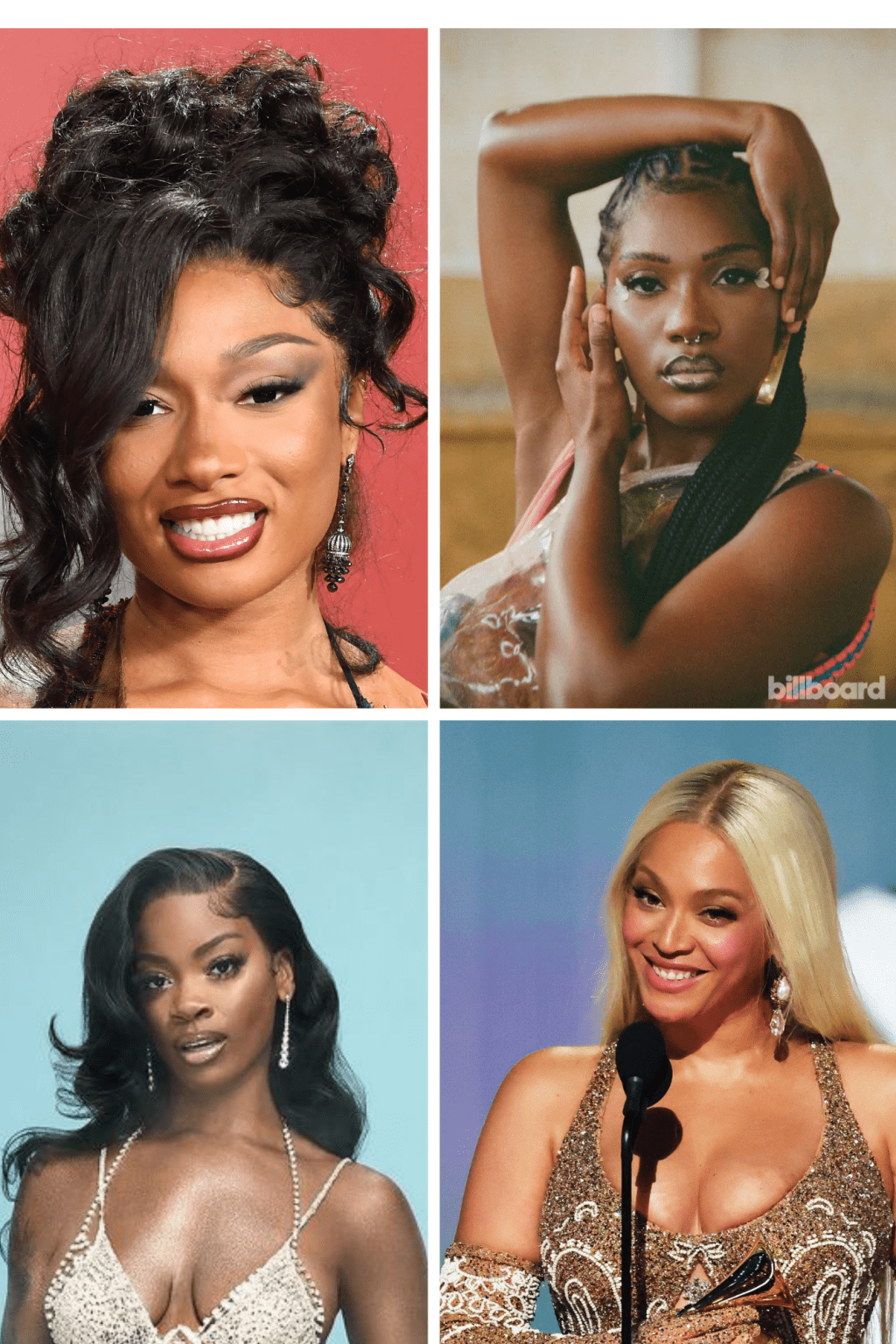
On February 2, 2025, CBS aired the 67th Annual Grammy Awards. Artists were given their flowers after contributing to the musical landscape the past year. A highlight artist of the night, Doechii, won her first Grammy for “Best Rap Album of the Year”. Beyonce’ also won a Grammy for “Best Country Album” and “Best Country Pop Duo.” After a decades long career, she also finally scored a win for “Best Album of the Year” for Cowboy Carter. After getting snubbed for Lemonade at the 2017 Grammys, witnessing her receive the long awaited AOTY award was satisfying. Not long after these announcements, fans took to social media to express their satisfaction with Doechii and Beyonce’s night of success. Unsurprisingly, many others did not share in the same feeling of vindication. Many claimed to not know of Doechii’s presence in the industry. Fans of Sabrina Carpenter, Taylor Swift, and Billie Ellish were in an uproar about Beyonce snagging the win for “Album of the Year”. While some were more mild opinions, others reeked of blatant misogynoir. Black women in the public eye are no stranger to the racist remarks and attitudes thrown their way. However, the outrage was a bit jarring considering Beyonce’s career spanning decades and Doechii’s breakout success. While there was much pushback against them winning those awards, Black women and fems were able to push back even harder.
As a consumer of pop culture, there is a noticeable difference in the visibility of black versus white female stars. Black women in all occupations can identify the hardships that derive from desiring greatness in your field. Over the last couple years, figures in pop culture have been utilizing “relatability” to gain and maintain parasocial relationships with their fans. Supporting an artist is heavily reliant on being able to see parts of yourself in them. It’s widely known that white people have a difficult time relating to black women in the media. They are unable to connect with the cultural differences between white and black people. Many people, regardless of race, are able to enjoy art and music that black people create. However, there rarely is any connection with the actual artists creating the music. Black women share a distinctive experience, sometimes regardless of class and status. Many black women can see themselves in the need to become an overachiever, similar to Beyonce’. Other black women know the feeling of being boxed in, in spite of continuously showcasing your duality, similar to Doechii. The obstacles purposely put in place to stifle black women’s progress is an unspoken truth many of us are aware of. That alone makes us invested in the stories and successes of someone like Doechii, Beyonce, and other black women in an immensely competitive industry. Through these hardships, we are able to discern the unseen difficulties in becoming successful black, female artists. Their path to fame becomes relatable.
The otherness black women feel has the power to be overwhelming. While I have my own critiques regarding the social capital celebrities hold, it is not uncommon for many to seek escapism through different people. As stated earlier, non black people have a tough time identifying with black women in pop culture. Even black men can have a hard time identifying with black women at times, adding to that feeling of “otherness.” The recent wave of female rappers in the last decade, has made this more apparent than ever. As a frequent consumer of rap, I’ve encountered many detractors who despise the female rap craze. I’ve become privy to the overwhelming disgust regarding black women’s sexuality. I do desire a world where the most popular images of black women are more diverse. However, I have to point out the hypocrisy in what society allows black men versus black women to discuss rap music. There is little contempt concerning how often men discuss their sexuality in music in comparison to women. Being able to escape into a world where women are the masters of their sexuality, confident, and commanding can be a great form of escapism. Despite our “otherness” in the eyes of society, the black female rap wave enables us to vicariously feel the self-assurance presented in their music. Truthfully, that unabashed self confidence is something that has been stripped from many black women (myself included). Unambiguous black women like Megan Thee Stallion, Flo Milli, Monaleo, and many more are commonly regarded as the pinnacle of desirability and sex appeal. Through the fashion, references within black culture, and colloquialisms associated with black women, we are also able to see glimpses of ourselves. Without many black women’s desire to break loose from the confines of social expectations, there wouldn’t be the rise of female rappers that there is today.
Oftentimes, visibility is accompanied by a lot of disdain. The average black woman can refer to times where they experienced microaggressions and macrogressions at their job (or just in general). Black women in the public eye are the target for many people’s vitriol towards black women. Women like Ari Lenox, Teyana Taylor, and Megan Thee Stallion have often been masculinized; their looks being compared to men or dogs. Many black women understand the act of being denied their womanhood. Features associated with white women are typically the idealized image of traditional femininity. The goal post for femininity is always moving, and society purposely shifts it further and further from black women. Watching highly visible Black women get berated on the internet is upsetting for fans to watch, especially if they have experienced the same thing. Black female fan bases have a tendency to use their wits to combat others’ ignorances, while also redirecting the conversation to a larger, pressing issue. While there may be some good comebacks and memorable banter, it always births a moment of togetherness for black women at the receiving end of every day misogynoir. Being able to connect with someone you support through shared grievances is a feeling black people are familiar with. Black female celebrities are able to bridge the distance between them and their own supporters through shared frustrations pertaining to black womanhood. I doubt that that is something achievable absent of a black female fanbase.
The aftermath of the 67th Annual Grammy Awards spawned new dialogue regarding respect black women in the entertainment industry receive, or lack thereof. A genre, such as country music, which was started by Black people, should occupy more black women. A newer artist, who had recent breakout success, should be a shoo-in for grammy nominations and wins. Why is there still hesitation to award black women for the phenomenal work they’ve been able to produce despite society’s hindrances? Aside from the music industry, black women still are the most underpaid demographic in America. What does it say to us when Black women involved with every occupation are feeling unappreciated despite all their efforts in comparison to their non-black peers? Admittedly, it is deeply disheartening to be constantly underestimated. That is something a lot black women know all too well. While women like Beyonce’ and other famous black women have gratuitous amounts of privileges, I still empathize with the frustration of being confined to one idea because of one’s identity. Black female celebrities, similar to non black ones, still have the duty to sell a narrative and story for their fans to root for. Black womanhood can come with countless challenges. Sometimes those obstacles are invisible to the rest of the world. To other black women, we are able to pull back the curtain and witness the difficulties in real time. We have a superpower to envision how long it took for our favorite artists’ hairstyles to get finished, how long it took to put on every outfit, and the difficulties of finding a makeup artist that specializes with our skin complexion. We also have the ability to pull back the curtain even further, and see the success despite the racial adversities. Through this unspoken understanding, black female fan bases will always have something to root for.


 21st Century Black Woman
Leave a comment