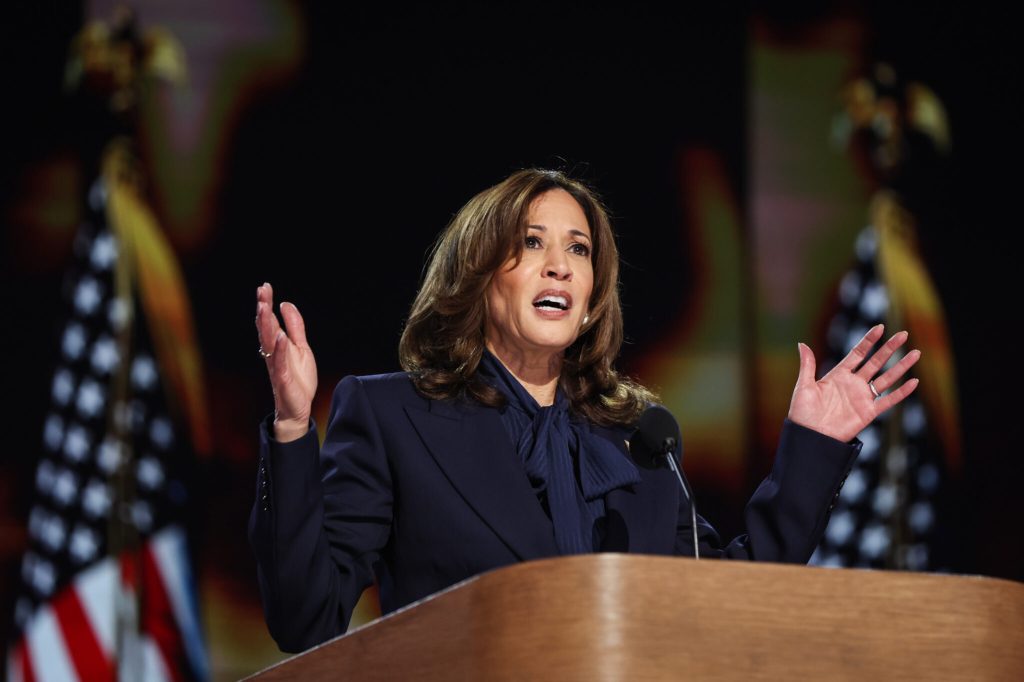
On Tuesday November 5th, 2024, my boyfriend invited my family and me to watch a dress rehearsal of a play he was understudying. “The Mountaintop”, written by Katori Hall, follows a fictionalized Dr. Martin Luther King Jr. staying in a motel room. He befriends an angel (taking the form of a maid), who eventually informs Dr. King of her true identity and his impending and irreversible assassination that will take place in 24 hours. While the rest of my family expressed their willingness to catch a free viewing of this performance, my mother verbalized concerns about going out during election night. Unsure of the dangers that awaited us in public venues amidst this historical evening, she cautioned for us to stay home. We affirmed that nothing out of the ordinary would happen and the winner of the 2024 election wouldn’t be announced until much later.
My sister, father, mother, and I made our way to the local theater about an hour away and were quickly escorted inside by my partner. About an hour and a half into the production, the show entered its final scene and emotional climax. During his last speech, Dr. King expresses the joy and pain of taking his people to the “mountain top”, only to be met with the bittersweet feeling of knowing he’ll never enjoy the fruits of his labor. However, he proclaims, with a great sense of pride, that Black people will continue to press on after he’s gone. The message of Dr. King’s final monologue left my family with a great sense of hope and optimism for the future. As we walked out the theater, we exchanged warm goodbyes and went our separate ways. I accompanied my boyfriend back to his house and anxiously awaited good news in the morning.
I woke up around 6 a.m. the next day, with a sinking feeling in my stomach. I laid awake next to my sleeping partner, afraid to check the two lively group chats I was a part of, that’d been discussing the election since the week prior. About an hour later, the mystery of not knowing the fate of this country for the next four years (and the effects of it long after) was slowly killing me. I decided it was time to rip the bandaid off. I journeyed to Google’s search engine. The first headline punched me in the gut: “Trump Wins 2024 Election.” I glared at the text in front me, in shock. I quickly entered my group chat consisting of 2 work friends and myself. They’d been following the results of the electoral college since last night. Both were made privy of Trump’s victory hours before I went to sleep. And they shared in the same hurt and despair that I was feeling. Disappointment and resentment filled up inside me. As I checked various social media sites, black women all shared similar sentiments: anger, dismay, shock, and apathy.
As the week pressed on, a theory I frequently heard and ran across on online spaces kept creeping to the forefront of my mind: Afropessimism. The concept that was coined by Frank Wilderson III, to my knowledge, suggests that Anti-Blackness is a vital part of our society at large. Afropessimism theorizes that black people occupy the fringes of “humanhood”, while our suffering and inflicted violence is necessary for every non-black person to live a more fulfilling existence. The theory also mildly questions if our pain is inextricably linked with other forms of oppression (a concept I subscribe to), or if black people’s specific suffering separate from all other oppressed and marginalized groups. In addition, the theory states we are denied access from our humanity and the pleasures of civil “white” life in its entirety. After Wednesday morning, my social media feeds were filled with nothing but apathetic, righteously pissed, and frustrated black women. While I have my own various, long stretching criticisms of Harris (as I do any politician), the job title of “President of the United States” seemed most suitable for a candidate of her education, evident intellect, and passion for this country’s progress. Over the years, more black women have been made knowledgeable of how this country, and in turn this world, views our humanity. They don’t see it.
Statistics indicate that black women are the most educated demographic within the black community in the U.S. However, the overwhelming obstacles, prejudices, and overlapping racism and misogyny make it impossible to truly partake in a celebration of that fact. While many of us are nailing and clawing our way to better ourselves through the perimeters that we’re born into, this country and the communities we inhabit are dead set on making sure we know our “place.” And this world’s disdain (and indifference) pertaining to our efforts to reach fulfillment, have been more than apparent. This specific election, however, outlined the very disdain and vitriol the average black woman can face, not only from her peers in her field of expertise, but from society as a whole. As I researched the election results further throughout the week, I was completely floored to learn that Trump not only gained more votes from the Electoral College, but managed to amass the popular vote amongst American citizens as well. In the 2016 election, I recall that Clinton lost because of the Electoral College, but she did manage to garner the popular vote.
As the think pieces (many in good faith, others not so much) continue to roll in, I notice the attitudes of black women changing due to this election. A lot of us are adopting a more pessimistic, and at times apathetic, view regarding the world around us. For me, learning that Trump won the popular vote, felt like a bigger betrayal. Not only that, but the percentage of people that voted for him increased in almost every demographic compared to the last election, with the exception of black women. I normally (and admittedly) lean towards being a pessimist regarding most issues. Nevertheless, the last couple of months of the 2024 election cycle made me feel a bit hopeful. After some reflection though, I’m ashamed to admit that my social media echo chamber probably skewed my view on how Kamala Harris was received by the general public. The results of this election, however, was my call to come back to reality. No matter how much a person spews hate towards an endless array of different minorities, oppressed, and marginalized groups, the most important thing to most people is to uphold the norms and expectations of society. In short, black women will never occupy the highest roles of significance in this country because the psyche of this society must cling onto Anti-Blackness for normalcy. I’m well aware of the other factors that influenced Trump’s victory: the empty promises of a better economy and the gaps in education amongst many of his voters. Nonetheless, anti-blackness and misogyny undoubtedly played a large part in Harris’ loss this election. While the country has made some strides to become more progressive over the years, society at large has made it unmistakably clear that the subjugation and violence inflicted upon black people (both physically and mentally) is the most crucial investment the world largely partakes in.
I am cognizant of the many presidential decisions made in office that oftentimes conflict with my more peaceful and harmonious calls to action (I’m looking at you, Obama air strikes). I reject the impulse to put her or any other public figure on a pedestal to deify. With that said, Harris’ failure to obtain a job she was more qualified for than her white, male competitor is only the tip of the iceberg of what black people, specifically black women, endure. This loss is a larger (and widely broadcasted) representation of the black woman’s plight in life. Afropessimism as a concept appears to be highlighting the issues black women have been screaming into an endless void for an unspecified amount of time.
As I fondly think back to watching “Mountain Top” surrounded by my loved ones, I can’t help but wrestle with the feelings the production allowed me to sit with. The hope that other people want to live in a world with less hatred, more compassion, and equality. Although I detest the way (white) liberals have used MLK Jr as a scapegoat to avoid accountability for the way they might uphold structural oppression, I truly did walk away from this specific play identifying with his struggle as a black person and revolutionary. Katori Hall, a black female playwright, did a phenomenal job humanizing a figure that so often is deified that he is no longer regarded as a once living human being. However, I can’t reference a time when someone produced a work like that for a black female political figure. How many of us are discussed and commonly known in comparison to our male counterparts? Maybe being considered and viewed as a fully capable and recognized human being by all people would be a nice start. Perhaps, that is black women’s “mountain top”.



 21st Century Black Woman
Leave a comment